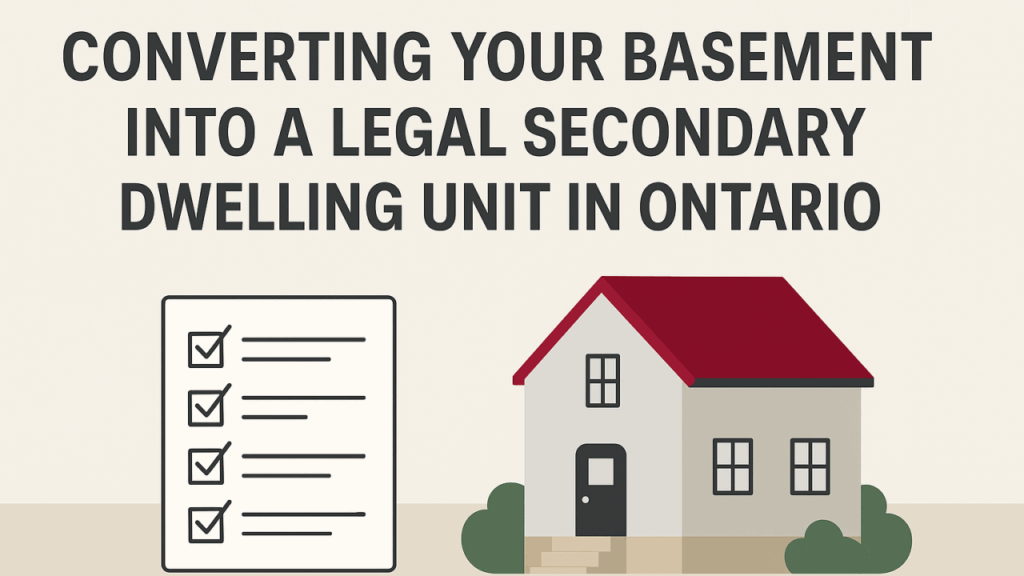
Across Ontario, homeowners are discovering the value of converting basements into secondary dwelling units. A well-designed legal basement unit can generate reliable rental income, increase property value, and make better use of existing space.
But it’s important to know: not every finished basement qualifies as a legal unit. To protect your investment and ensure tenant safety, you need to follow the Ontario Building Code (OBC) and your local municipal by-laws.
Here’s a clear guide to help you get started.
Why You Need a Building Permit
Any renovation that involves major changes, such as adding a separate entrance, upgrading plumbing, or altering electrical and structural layouts requires a building permit.
Permits ensure the work meets safety and compliance standards. Skipping this step could lead to costly fines or even orders to remove unapproved work.
Key Ontario Building Code Requirements
While each municipality has specific zoning by-laws, the Ontario Building Code sets the minimum standards for legal secondary units:
- Ceiling Height – At least 6’11” in most areas, with allowances for beams or ducts down to 6’5”.
- Fire Safety – Fire-rated walls, ceilings, and doors; interconnected smoke alarms; and carbon monoxide detectors near sleeping areas.
- Egress & Light – Bedrooms must have windows that allow escape in emergencies and provide natural light equal to 5% of the floor area.
- Heating & Ventilation – The unit must maintain 22°C year-round, with proper ventilation and airflow.
These requirements aren’t just red tape, they’re essential for safe living conditions. Always check your local zoning regulations before finalizing your plans.
Separate Entrance & Zoning Rules
A legal basement unit must have a dedicated, code-compliant entrance. This is usually a side or rear door that gives tenants safe, independent access.
Zoning by-laws vary by city, but often cover:
- Lot frontage and property size
- Where secondary dwelling units are permitted
- Minimum parking spaces required
Before beginning design work, check with your local planning department to confirm zoning permissions.
When Extra Approvals May Apply
Most basement unit projects move forward with permits and inspections. However, you may need additional reviews in certain situations:
- Conservation Authority approval if your property is near floodplains, ravines, or wetlands.
- Storm water management review if your new entrance affects grading or drainage.
- Septic system upgrade if the property is not on municipal services.
- Heritage property approval if the home is historically designated.
These checks aren’t required for every home, but they’re critical in special cases.
Step-by-Step Process
To simplify, here’s the approval pathway most homeowners will follow:
- Zoning Check – Verify your property qualifies for a secondary dwelling unit.
- Permit Drawings – Have a qualified designer or engineer prepare site and floor plans.
- Permit Application – Submit your drawings and details to the city.
- Reviews & Approvals – City staff check compliance with zoning and OBC.
- Construction – Build according to approved drawings.
- Inspections – Municipal inspectors review structural, plumbing, electrical, and fire safety work.
- Registration – In some cities, you must officially register the unit once complete.
Why Doing It Right Pays Off
Converting your basement into a legal secondary dwelling unit takes time, planning, and investment. But the benefits are significant:
- Protects your property value
- Ensures tenant safety and compliance
- Avoids legal fines or stop-work orders
- Attracts reliable tenants and maximizes rental income
How PES Associates Can Help
At PES Associates, we specialize in guiding homeowners across Ontario through the process of designing, permitting, and approving legal basement units. With a Professional Engineer on our team, we ensure your project is safe, efficient, and fully compliant with the Ontario Building Code.
📞 613-716-3457